This education blog shares various horizons of music in order to promote sustainable development of music education. Being devoted to music education for 19 years, Carol Ng has established her private studio at Adelaide, South Australia with an examination-standard Yamaha grand piano. In addition, Carol is keen on enlightening the next generation and advocating continuous advancement of music industry.
Struggling with procrastination? Here's our professional advice on how to stay focused during practise.
As a pianist, one of the biggest challenges you will come across is your ability to stay focused and to keep your eyes on the prize. In a world where procrastination has stolen many a person's dreams, we refuse to let you lose sight of what you're working towards.
So, here are Pianist's 5 key tips on how to stay focused during practice.
RCM graduate Alec Coles-Aldridge argues that starting early may be your best bet
In 2013, the Beijing Normal University released the results of a study which concluded that individuals who started learning the piano before the age of seven benefited from advanced cognitive skills later in life. The benefits remained even for those who stopped practising in their teenage years.
On the contrary, Linda Lorenzo - Director for Learning and Engagement with the Sydney Symphony Orchestra - is a believer that there is no real ideal age. Instead, she advises that the physical nature and interests of the child should be considered. A child who is physically strong might suit a brass instrument. A child with large hands might suit the piano. A child who enjoys the sound of the double bass should begin on the cello before progressing to the double bass when their physique can cope with such a large instrument.
On the other hand, the Peterson Family Foundation provides a comprehensive list for which instruments suit specific age ranges. The piano is deemed an instrument suitable for the earliest of children; age three-four is considered a good time to begin these lessons. With such diverse and contradicting answers from studies, teachers and education experts, what really is the best age for learning the piano? Does age even matter?
There are two important topics need to be considered...
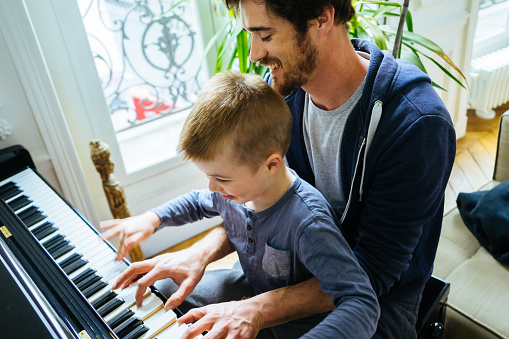
If your child has taken a liking to the piano, here are 4 ways that you can support them along their journey.
Watching your kids excel in various hobbies really is one of the biggest joys a father can feel. Not many feelings beat it. It’s really important that fathers support them in their passions in the right way. So, if your child has taken a liking to the piano, here are 4 ways that you can support them along their journey.
Many parents ask: “At what age can our children start piano?”, while older beginners ask: “Am I too old to learn piano? How proficient can I expect to be? How long will it take?” We are increasingly beginning to recognize that what we had attributed to “talent” was in reality a result of our education. This relatively recent “discovery” is radically changing the landscape of piano pedagogy. Therefore, we can legitimately question whether talent is such an important factor in how quickly you can learn to play. So then, what IS an important factor? Age is one, because learning piano is a process of developing nerve cells, especially in the brain. The process of nerve growth slows down with age. So let’s examine categories of beginners according to their ages, and the consequences of slowing cell growth with age.
話說一直以來, Miss Carol 每個月都收到不少爸爸媽媽的電郵電話,為家中年約兩、三歲的小寶寅寶,查詢學琴安排,但由於香港一直缺乏專為學習鋼琴而設的幼兒課程,Miss Carol 每次都只能很抱歉的,請爸爸媽媽待小寶寶長大一點,到了五歲再作打算,有些熱心的爸爸媽媽,會WAITING LIST 排候補名單,待足歲數再AUDITION 面試。直至上年,Miss Carol 四出探訪,終於找到WUNDERKEYS PIANO FOR PRESCHOOLERS,這個課程是專為三至五歲的學前兒童設計,亦是專門針對往後學習鋼琴的預備課程,更意想不到,引入香港不久,傳媒M for Mother便已經風聞這個課程,上月更特意訪問Miss Carol ,讓更多爸爸媽媽認識到這個在美國、加拿大等地已經流行了十多年的老牌課程。
心理學中有名的“耶克斯·多德森”定律指出,動機強度與工作效率的關係呈倒“ U ”形,也就是說動機太弱,內驅力激發不起來,工作效率就不高;相反,動機太強,超過了一定的限度,工作效率反而越來越低。在大多數情況下,演奏中斷情況的出現是演奏者精神過於集中或突然高度集中所導致的。許多演奏者在舞台上會突然想起平時練琴時沒有想過的問題,比如左手下一個音該是什麼? 主題下一次出現在哪一個聲部? 這裡要不要踩踏板等等,這時演奏者思想過度集中,處處小心翼翼,生怕彈錯,導致了鋼琴演奏者註意力的控制失調,影響手指的運動和音樂的表達,從而影響鋼琴演奏的連貫性和準確性。
When it comes to choosing classical music tracks for kids to listen to, people often don’t know where to start. I have experimented with many tracks over the years and so come armed with plenty of suggestions that have been tried and tested and are guaranteed to go down well. Here is my definitive list of music that gets kids moving, good for background for crafting or to encourage creativity.
This page contains affiliate links.
Music has many wonderful uses and it can be chosen to fit any mood or activity. Children love contrast, so don’t be frightened to mix it up a bit. So here are my top 14 classical music tracks for kids, it was supposed to be 10 but I found it difficult to be so restrained! Hopefully it will help get you started…
14 Best Classical Music Tracks For Kids
1.Johann StraussTritsch-Tratsch-Polka Op. 214
Great for skipping around to, good for imaginative movement.
2. Johann StraussRadetzky March Op 228
An obvious choice for marching, banging on drums and pretending to be a soldier!
3. Tchaikovsky The Nutcracker Suite Op.79a
Who wouldn’t want to be a sugar plum fairy or march like a tin soldier!? Great variety- not just limited to Christmas and your children might already recognise it if they like the film Elf!
4. Elmer BernsteinThe Great Escape Theme Tune
Another one for marching! Really good one to clap or drum the beat of the music to.
5. Henry Hall OrchestraTeddy Bear’s Picnic
Dancing with your favourite teddy bears to this track is compulsory!
6. Henry Hall OrchestraWho’s Afraid of the Big Bad Wolf?
Great song which goes with the story of the Three Little Pigs. You can read the story and then sing along to the song!
7. Georges BizetCarmen Suite #1: Les Toreadors
MORE marching! Particularly good for older children to pretend to conduct to, fantastic for expression and hours of rousing fun!
8. Edward ElgarPomp and Circumstance March #1 Op.39
Similar to the Bizet track above, encourages similar kind of movement, kids just can’t resist joining in!
9. George Frideric HandelWater Music
Calming and floaty, group activity of floating scarves, or fantastic calming background music.
10. Vivaldi’s Four Seasons
Same category as the above, perfect for background to games and other activities.
11. Johann Pachelbel Canon in D
12. J.S Bach Air on the G String
As above – and one most people will recognise!
13. Camille Saint-Saens Carnival of the Animals
This is perfect for imaginative movement for slightly older (primary school age) children. Different animals are represented in the music, see if your children can guess which are which!
14. Traditional Scottish Country Dancing
Great for circle games, skipping through arches and budding river dancers!
We would love to add to this list. What do you think should go on? Add your/your little ones favourites in the comments below.