This education blog shares various horizons of music in order to promote sustainable development of music education. Being devoted to music education for 19 years, Carol Ng has established her private studio at Adelaide, South Australia with an examination-standard Yamaha grand piano. In addition, Carol is keen on enlightening the next generation and advocating continuous advancement of music industry.
Struggling with procrastination? Here's our professional advice on how to stay focused during practise.
As a pianist, one of the biggest challenges you will come across is your ability to stay focused and to keep your eyes on the prize. In a world where procrastination has stolen many a person's dreams, we refuse to let you lose sight of what you're working towards.
So, here are Pianist's 5 key tips on how to stay focused during practice.
The ultimate guide to a neat and tidy piece of sheet music.
If you are currently composing or arranging a piece of music, you will know that tidying up your score before completion is a challenge! Our quest for perfection can drive us to tweak, change and edit more than we need to, with no real system in place.
The checklist below is going to be absolutely invaluable for when you are approaching the finishing stages of your compositional process. Work your way through each point at your own pace, and you’ll finish up with a beautifully neat and tidy score.
Our top tips on what to include in your practice, how long to practise for, and how to maximise your time spent at the piano
By the time you have finished reading this article, you are going to walk away with a practice structure all set-out and ready for your next session. You will know:
Pianist and writer Frank Huang dishes out his advice on how to streamline the practice process
Many of you will have asked yourself: How am I supposed to practise? How can I maximize my time and efficiency on my own? How can I make practice fun and enjoyable? How can I track the progress that I have made throughout the week?
It can be a huge challenge trying to figure out how to practise efficiently and effectively at the same time. Take a look at our 5 tips to streamlining your practice process below…
Classical pianist & columnist Daniel Johnson suggests ways of learning piano later in life
Coming to the piano later in life or picking it back up after a break, there will always be a sense of what you want to achieve, and the sudden realisation that it is going to be a long journey. But, with the right experiences and lead from your teacher, you will soon find that it’s the sheer enjoyment that is the most important part of all.
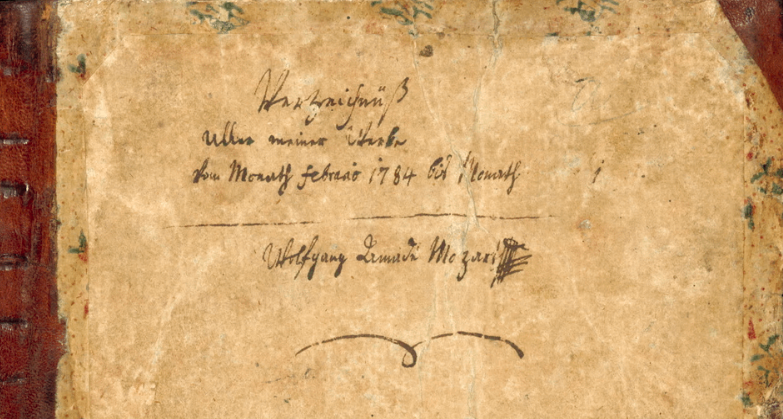
We have a tendency to regard Wolfgang Amadeus Mozart's music as having emerged fully formed into the world, not least because we hear it performed almost exclusively in a highly polished state of near-perfection. That makes any glimpse into the process of its creation all the more valuable, and the British Library has now provided us with much more than such a glimpse: at its site you can now read Mozart's own thirty-page musical diary, a record of "his compositions in the last seven years of his life" and thus "a uniquely important document" in the history of classical music.
Hanon exercises help drastically improve THREE key areas of your playing...
Hanon exercises feature in households all around the globe, and for good reason. These piano exercises, which have been in existence for over 150 years, are proven to massively improve THREE key areas of your piano playing. In this article, we’re going to tell you what Hanon exercises are, how they can help you improve, and we’re also going to give you some of your own to try out.
Many parents ask: “At what age can our children start piano?”, while older beginners ask: “Am I too old to learn piano? How proficient can I expect to be? How long will it take?” We are increasingly beginning to recognize that what we had attributed to “talent” was in reality a result of our education. This relatively recent “discovery” is radically changing the landscape of piano pedagogy. Therefore, we can legitimately question whether talent is such an important factor in how quickly you can learn to play. So then, what IS an important factor? Age is one, because learning piano is a process of developing nerve cells, especially in the brain. The process of nerve growth slows down with age. So let’s examine categories of beginners according to their ages, and the consequences of slowing cell growth with age.
話說一直以來, Miss Carol 每個月都收到不少爸爸媽媽的電郵電話,為家中年約兩、三歲的小寶寅寶,查詢學琴安排,但由於香港一直缺乏專為學習鋼琴而設的幼兒課程,Miss Carol 每次都只能很抱歉的,請爸爸媽媽待小寶寶長大一點,到了五歲再作打算,有些熱心的爸爸媽媽,會WAITING LIST 排候補名單,待足歲數再AUDITION 面試。直至上年,Miss Carol 四出探訪,終於找到WUNDERKEYS PIANO FOR PRESCHOOLERS,這個課程是專為三至五歲的學前兒童設計,亦是專門針對往後學習鋼琴的預備課程,更意想不到,引入香港不久,傳媒M for Mother便已經風聞這個課程,上月更特意訪問Miss Carol ,讓更多爸爸媽媽認識到這個在美國、加拿大等地已經流行了十多年的老牌課程。
心理學中有名的“耶克斯·多德森”定律指出,動機強度與工作效率的關係呈倒“ U ”形,也就是說動機太弱,內驅力激發不起來,工作效率就不高;相反,動機太強,超過了一定的限度,工作效率反而越來越低。在大多數情況下,演奏中斷情況的出現是演奏者精神過於集中或突然高度集中所導致的。許多演奏者在舞台上會突然想起平時練琴時沒有想過的問題,比如左手下一個音該是什麼? 主題下一次出現在哪一個聲部? 這裡要不要踩踏板等等,這時演奏者思想過度集中,處處小心翼翼,生怕彈錯,導致了鋼琴演奏者註意力的控制失調,影響手指的運動和音樂的表達,從而影響鋼琴演奏的連貫性和準確性。
Music is the universal language. In 1700, Bartolomeo Cristofori invented the modern piano.
Since then, over 2000 different brands had taken over this instrument.
Here is a top 10 piano brands list, based on the quality and people recommendation.
Greatest Piano Brands
Number 10: Bosendorfer
Created in Vienna, Austria, the Bosendorfer has been building handcrafted pianos since 1828. The company is one of the most popular when it comes down to grand piano collections and luxury. This company is the oldest fabricator of pianos in today’s market. It is popular among people that seek luxury or have opulent piano collections. Bösendorfer invented the extension of the typical 88-key keyboard, developing the Imperial Grand, which has 97 keys. This novelty was originally requested as a custom built piano for Ferruccio Busoni, who desired to transcribe an organ piece that went to the C below the regular keyboard. This change worked so well, that the piano was added to common product offerings and hastily became one of the world’s most beloved concert grands.
Number 9: Fazioli
The company name comes from Paolo Fazioli, a music partisan. Born in Sacille, Italy, he began creating pianos back in 1978. Working with mathematicians, physicists, technicians and wood technologists, his company manufactures some of the biggest pianos in today’s market.
Number 8: Stuart and Sons
The company was founded in 1990 in Australia. This pianos are world-wide known for their innovative, handcrafted and unique qualities. Among those is the fact that the piano has 14 more keys than a classic piano, which allows higher and lower notes. Stuart and Sons pianos can be expensive because they are not manufactured for the mass market.
Number 7: Bechstein
Preferred by pianists who play in recording studios or perform in concerts, the company was created in Germany in 1853. During the 1st and 2nd World War, the company suffered great losses, but then made a huge comeback. They sell upright and grand pianos. The Beatles, Elton John or Freddy Mercury, they have all been followers of the brand. Bechstein has been known as the creator of one-of-a-kind art case pianos since the 19th century. Art case pianos were assigned by interior designers for royal castles and fancy mansions. Artists and craftsmen were contracted by Bechstein to make special pianos embellished with gold, hand-engraved details, and hand-painted art on the piano case. Some of the Bechstein art cases are now museum pieces, while others are sometimes exchanged at musical-instrument auctions, mainly in New York and London.
Number 6: Mason and Hamlin
Manufacturing pianos since 1883, the company is situated in Haverhill, Massachusetts. Based on models that are presented in the market, the company has high standard of quality. In 1996, Mason and Hamlin was obtained by Burgett, Inc.
Number 5: Charles R. Walter
In 1975, Charles Walter introduced his 1st piano to the keyboard market. Known for the quality woods that they use, the company produces pianos made to leave as legacy for the next generations.
Number 4: Kawai
The company, founded by Koichi Kawai, originated in Japan, where Koichi was born and raised. Known for their digital and acoustic pianos, the company has been around since 1927. When it comes to pianos, you can expect nothing but the finest quality.
Number 3: Yamaha
Originally called Nippon Gakki, the company name was changed to Yamaha in 1987. It was founded by Torakusu Yamaha, and gives the opportunity for everyone who wishes to learn to play. The only disadvantage is a somewhat shorter lifespan in contrast to handcrafted pianos that can be found America or Europe.
Number 2: Baldwin
Baldwin is one of the largest keyboard instruments and piano maker in America. Founded in 1862 in Cincinnati by music teacher Dwight Hamilton, the product became popular for its quality and detailed craftsmanship. Today, the company can be found in Nashville, Tennessee.
Number 1: Steinway & Sons
Receiving awards from New York, Paris and many other institutions for their pianos quality, Steinway & Sons continues, to this day, to pass all standards. It was founded by German immigrant Henry Steinway in the New York City of 1853. Other than the extravagant Steinway & Sons brand, Steinway markets two budget brands: Essex for the entry-level market and Boston for the mid-level market. Boston and Essex pianos are fashioned using lower-cost pieces and labor. Pianos of these two brands, built with Steinway owned designs, are made in Asia by suppliers. Steinway permits only its authorized Steinway marketers to carry new Boston and Essex pianos.
Posted by Alexander SimovOn September 30, 2013
from "Piano Brands"
The Making of a Steinway - A Steinway & Sons Factory Tour Narrated by John Steinway
The Making Of A Baldwin Piano Video: Pianos Made In America
The idea was to provide guidance and suggestions for parents and kids just starting out in music, with ideas for everything from finding a great teacher to reducing audition anxiety.
1 Find somewhere quiet. This seems too obvious for words, but not only will you be far less likely to succumb to all sorts of distractions, but entering a special practice area, whether it’s a certain room or just a corner of the living room, will help prepare you mentally for this very particular kind of work. Mindful intention is everything, and having the ritual of going to the same place every time can help set that intention.
2 Have your supplies nearby. I really love cellist David Finckel’s “Cello Talks” 100-video series on YouTube; you don’t have to play cello to get a lot out of many of them. Some of what he covers seems like impossibly basic advice — as in the discussion (below) of his practice space. Part of his advice is to keep a pencil sharpener and a very clean eraser within arm’s reach, along with a pencil to mark up your music. Simple, right? But those little things are easy to forget, and if you have to go searching for them, add up to a big waste of time.
3 Technology can be an amazing aid — as long as you don’t spend too much time futzing with it. Three free or low-cost apps I have on my phone and iPad: a metronome, a tuner and a timer, which are all essential tools for practicing. And I always have my phone with me (see above).
4 Begin with the end in mind: Have a goal for each practice session before you start playing. Just playing through your music isn’t the same thing as practicing. Before you start, think: What do I want to accomplish today? If you’re not sure what you need to focus on, ask your teacher for a few concrete goals to work toward before the next lesson — and write them down so that you can refer to them during your practice sessions.
5 Map a practice session out like a workout. Lots of musicians start with a few actual stretches and breathing exercises before they pick up their instruments. Even if you don’t go quite that far, a pretty common scenario is to start with scales as a warm-up, to loosen up your muscles and get your brain thinking about technique; move on to the “working” part where you analyze and try to solve problems; then cool down by improvising or revisiting some music you already know well.
6 Practice smarter, not necessarily longer. You’ll probably accomplish a whole lot more in a short amount of time if you have a very focused objective — and science tells us that we have alimited amount of willpower to draw upon anyway. So make the most of the time you have. Say you are having trouble with two very tricky measures. Set your timer for a short period (like five or 10 minutes), and then work just on one problem in as many ways as you can — break it down into even smaller and more manageable bits, go super slow, try to play the passage backwards, change the rhythm, whatever. If that trouble spot is still giving you agita, then make yourself a mental note to come back to that section again tomorrow. Chances are it will be much, much easier the next time around.
7 Don’t always start at the beginning every time. Remember what I said about maximizing your time and your willpower? This. It can feel really good to hear yourself playing the beginning of a piece beautifully, but you may wind up wasting the limited time and energy you have. (Also, it leads to performances that start strong and then, well, wilt.)
8 Challenge yourself — physically. Especially if you’re trying to wrestle down an element that you find problematic, scientific researchers say that if you add a physical challenge to the difficult task, such as trying to play that part while standing on one leg or while walking, your brain is likely to start carving out new neural pathways — and the original task will be easier when you return to just doing that.
9 Practice away from your instrument. Many musicians use visualization in the same way that athletes do: They run through their music without touching their instruments. Try bringing your music along with you (either on paper or a mobile device) when you know you’ll have some downtime, such as during a car or train ride, and read through the piece silently.
10 Reward hard work — in positive ways — to help your brain automate good habits. That sounds like out-and-out bribery, but again, science!




 Created in Vienna, Austria, the Bosendorfer has been building handcrafted pianos since 1828. The company is one of the most popular when it comes down to grand piano collections and luxury. This company is the oldest fabricator of pianos in today’s market. It is popular among people that seek luxury or have opulent piano collections. Bösendorfer invented the extension of the typical 88-key keyboard, developing the Imperial Grand, which has 97 keys. This novelty was originally requested as a custom built piano for Ferruccio Busoni, who desired to transcribe an organ piece that went to the C below the regular keyboard. This change worked so well, that the piano was added to common product offerings and hastily became one of the world’s most beloved concert grands.
 The company name comes from Paolo Fazioli, a music partisan. Born in Sacille, Italy, he began creating pianos back in 1978. Working with mathematicians, physicists, technicians and wood technologists, his company manufactures some of the biggest pianos in today’s market.
 The company was founded in 1990 in Australia. This pianos are world-wide known for their innovative, handcrafted and unique qualities. Among those is the fact that the piano has 14 more keys than a classic piano, which allows higher and lower notes. Stuart and Sons pianos can be expensive because they are not manufactured for the mass market.
 Preferred by pianists who play in recording studios or perform in concerts, the company was created in Germany in 1853. During the 1st and 2nd World War, the company suffered great losses, but then made a huge comeback. They sell upright and grand pianos. The Beatles, Elton John or Freddy Mercury, they have all been followers of the brand. Bechstein has been known as the creator of one-of-a-kind art case pianos since the 19th century. Art case pianos were assigned by interior designers for royal castles and fancy mansions. Artists and craftsmen were contracted by Bechstein to make special pianos embellished with gold, hand-engraved details, and hand-painted art on the piano case. Some of the Bechstein art cases are now museum pieces, while others are sometimes exchanged at musical-instrument auctions, mainly in New York and London.
  Manufacturing pianos since 1883, the company is situated in Haverhill, Massachusetts. Based on models that are presented in the market, the company has high standard of quality. In 1996, Mason and Hamlin was obtained by Burgett, Inc.
 In 1975, Charles Walter introduced his 1st piano to the keyboard market. Known for the quality woods that they use, the company produces pianos made to leave as legacy for the next generations.
 The company, founded by Koichi Kawai, originated in Japan, where Koichi was born and raised. Known for their digital and acoustic pianos, the company has been around since 1927. When it comes to pianos, you can expect nothing but the finest quality.
 Originally called Nippon Gakki, the company name was changed to Yamaha in 1987. It was founded by Torakusu Yamaha, and gives the opportunity for everyone who wishes to learn to play. The only disadvantage is a somewhat shorter lifespan in contrast to handcrafted pianos that can be found America or Europe.
 Baldwin is one of the largest keyboard instruments and piano maker in America. Founded in 1862 in Cincinnati by music teacher Dwight Hamilton, the product became popular for its quality and detailed craftsmanship. Today, the company can be found in Nashville, Tennessee.
 Receiving awards from New York, Paris and many other institutions for their pianos quality, Steinway & Sons continues, to this day, to pass all standards. It was founded by German immigrant Henry Steinway in the New York City of 1853. Other than the extravagant Steinway & Sons brand, Steinway markets two budget brands: Essex for the entry-level market and Boston for the mid-level market. Boston and Essex pianos are fashioned using lower-cost pieces and labor. Pianos of these two brands, built with Steinway owned designs, are made in Asia by suppliers. Steinway permits only its authorized Steinway marketers to carry new Boston and Essex pianos.